Narrative orientation
Where we are
The risen Jesus turns grief and fear into witness, peace, mission, forgiveness, and the climactic confession of faith.
Narrative magnification
Scenes in This Chapter
Follow the story's natural units, then return here to open the existing verse-by-verse study.
Watch, listen, and go deeper
Media companions for John 20
Begin with the biblical text, then use these clearly labeled Lutheran, Christian, and academic resources for orientation, teaching, and deeper study.
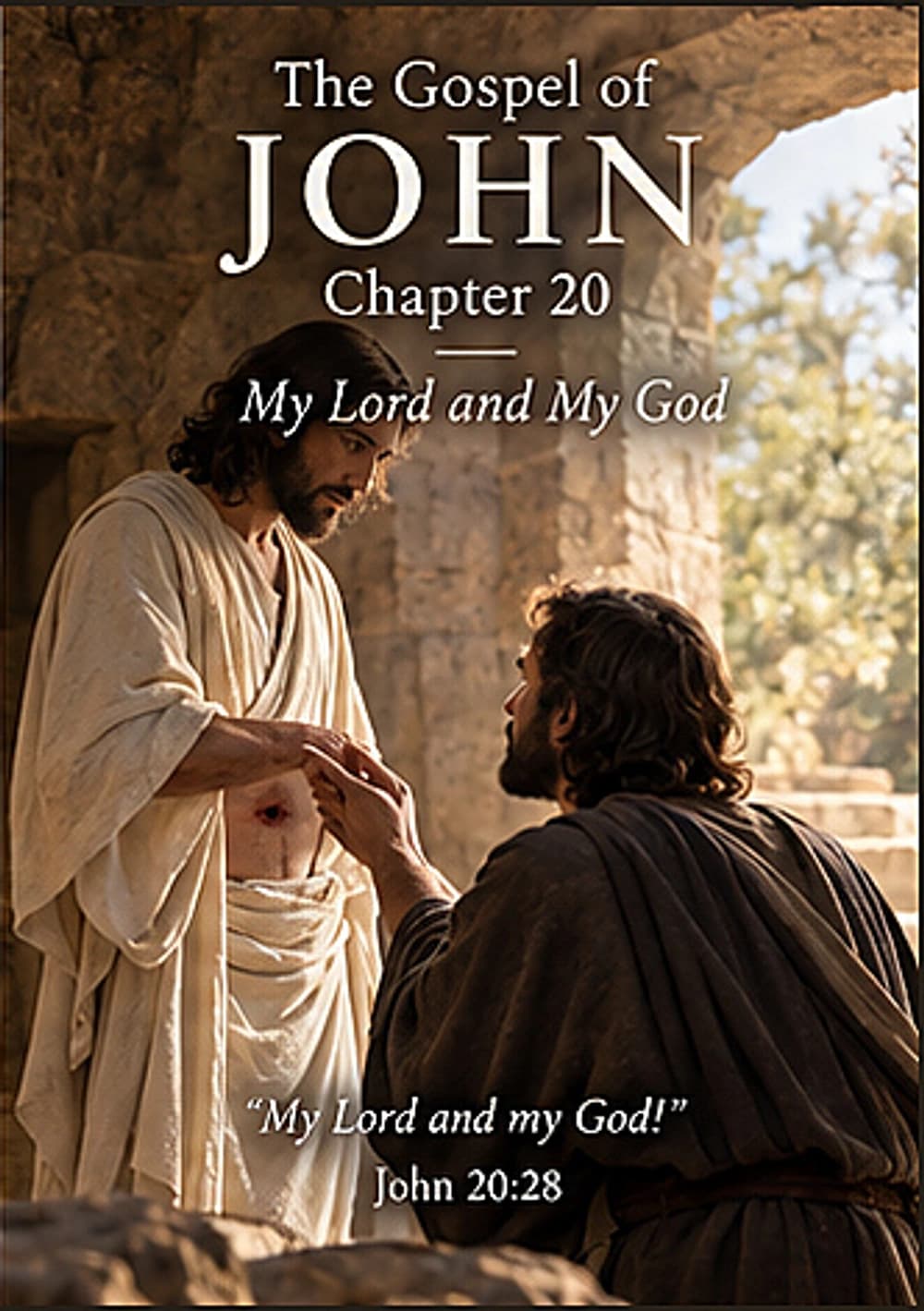
Misplaced Doubt
The Lutheran Hour
John Nunes proclaims the risen Christ through Thomas's encounter in John 20:24-29.
Open audio resource (opens in a new tab)
Congregational Course: John
Concordia Seminary, St. Louis
Focused video lessons from Dr. Charles Gieschen and Dr. David Lewis on the text, structure, Christology, signs, glory, and Spirit in John.
Open video resource (opens in a new tab)
Eternal Life
BibleProject
A short biblical-theology video that helps readers trace the life Jesus gives in the present and in the resurrection.
Open video resource (opens in a new tab)
Guide to the Gospel of John
BibleProject · Two videos, 8:46 and 8:32
Two concise visual overviews introduce John's literary movement, signs, discourses, death, and resurrection. Use as orientation alongside the site's Lutheran theological study.
Open video resource (opens in a new tab)
Jesus in All of John
Spoken Gospel on YouVersion
Fifteen short, Christ-centered videos cover John in compact passage ranges from the prologue through the lakeside restoration.
Open video resource (opens in a new tab)
Thy Strong Word: Gospel of John
KFUO Radio
A consecutive, pastor-led study through John from the official broadcast voice of the LCMS. Use the collection to find the episode for this chapter.
Open audio resource (opens in a new tab)30 Minutes in the New Testament: John
1517
An accessible Lutheran conversation that begins with John 1:1-18 and continues sequentially through the Gospel.
Open audio resource (opens in a new tab)Verse-by-verse Bible study
Read every verse, then follow it deeper
The complete WEB text is always visible. Select a verse for passage setting, themes, exegetical study, theological connections, application, prayer, and supplied Greek text.
The World English Bible text is public domain and reproduced from the official 2020 stable eBible.org source. Study and deep-dive material synthesizes the supplied South Lake Church John compilations and the existing research library. Scripture governs every note.
John 20:1-10
The empty tomb and believing sight
Mary's alarm brings Peter and the beloved disciple to the ordered grave cloths and the beginning of resurrection faith.John 20:11-18
Mary announces the risen Lord
Jesus finds Mary in grief, calls her by name, and sends her to announce His resurrection and shared Father.John 20:19-23
Peace, Spirit, and mission
Jesus enters the locked room, shows His wounds, breathes the Spirit, and sends disciples with the ministry of forgiveness.John 20:24-31
Thomas and the purpose of the book
Jesus meets Thomas's demanded terms, calls him to faith, and receives the Gospel's climactic confession.Natural literary ranges
Passage-by-passage study
John 20:1-10
The empty tomb and believing sight
Mary's alarm brings Peter and the beloved disciple to the ordered grave cloths and the beginning of resurrection faith.- Narrative setting
- The garden tomb before dawn on the first day of the week.
- Who is speaking
- Mary Magdalene, Peter, beloved disciple
- What is happening
- The stone is already removed; two disciples run, see distinct details, and return while Scripture understanding still develops.
- What this reveals about Jesus
- Jesus has risen bodily, leaving signs that summon faith rather than a scene of grave robbery.
- Faith and unbelief
- The beloved disciple's seeing becomes belief, while the precise content and Scripture-shaped fullness of that faith continue to unfold.
Verse-by-verse movement
- Mary comes while it is still dark.
- An open tomb produces a fearful report.
- Peter and the beloved disciple run together.
- The beloved disciple arrives first but waits.
- Peter enters and inspects the cloths.
- The face cloth lies separately.
- The other disciple enters, sees, and believes.
- Scripture understanding will catch up to encountered evidence.
Scriptural connections
Old Testament: Psalm 16:9-11; Isaiah 53:10-12
Gospel
Death's enclosure is open and the Lord's grave no longer holds Him.
Coram Deo
Faith receives testimony and learns to understand the resurrection through Scripture.
Application
Receive Christ's word in faith, then let His gift take form in truthful love toward the neighbor.
Prayer
Lord Jesus, open our eyes to Your glory and keep us in Your word. Amen.
John 20:11-18
Mary announces the risen Lord
Jesus finds Mary in grief, calls her by name, and sends her to announce His resurrection and shared Father.- Narrative setting
- Outside the garden tomb.
- Who is speaking
- Mary Magdalene, angels, Jesus
- What is happening
- Weeping, mistaken identity, recognition, transformed relation, and commissioned speech make Mary the first resurrection witness in John.
- What this reveals about Jesus
- Jesus is the risen Shepherd who knows His own by name and ascends to His Father and theirs.
- What this reveals about the Father
- The risen Son shares His filial destination as gift: 'My Father and your Father.'
- Faith and unbelief
- Mary moves from loss and mistaken sight to personal recognition and apostolic announcement.
Verse-by-verse movement
- Mary remains and weeps.
- Angels sit where the body had lain.
- The question turns toward her lost Lord.
- Jesus stands near, initially unrecognized.
- One spoken name changes everything.
- Mary answers 'Teacher.'
- Jesus redirects her from holding to mission.
- His Father is now named as the disciples' Father.
- Mary announces, 'I have seen the Lord.'
Scriptural connections
Elsewhere in John: John 10:3-4; John 14:1-3
Gospel
The risen Shepherd speaks the grieving disciple's name and turns her toward witness.
Coram mundo
Resurrection faith is sent speech: Mary carries the Lord's word to His brothers.
Application
Receive Christ's word in faith, then let His gift take form in truthful love toward the neighbor.
Prayer
Lord Jesus, open our eyes to Your glory and keep us in Your word. Amen.
John 20:19-23
Peace, Spirit, and mission
Jesus enters the locked room, shows His wounds, breathes the Spirit, and sends disciples with the ministry of forgiveness.- Narrative setting
- A locked room on Easter evening.
- Who is speaking
- Jesus, disciples
- What is happening
- Fear becomes joy; the Father's sending extends through the Son to the Spirit-empowered Church.
- What this reveals about Jesus
- The crucified One is bodily risen and sends His Church with peace and forgiving authority.
- What this reveals about the Father
- The Father's sending of the Son becomes the pattern and source of the Son's sending of the Church.
Verse-by-verse movement
- Fear locks the disciples inside.
- Jesus stands among them and speaks peace.
- His wounds identify the risen One with the crucified Lord.
- Seeing Him turns fear toward joy.
- Jesus repeats peace and extends the Father's mission.
- He breathes the Holy Spirit.
- Forgiveness and retention are entrusted to the sent community.
Scriptural connections
Old Testament: Genesis 2:7; Ezekiel 37:9-10
Elsewhere in John: John 14:27; John 15:26-27; John 17:18
Wider New Testament: 2 Corinthians 5:18-20
Gospel
The first word to failed, frightened disciples is peace, followed by Spirit and a ministry centered on forgiveness.
Coram mundo
The Church is sent as a reconciling community, speaking Christ's forgiveness and His truthful judgment.
Lutheran reflection
The risen Lord's gift grounds the Church's ministry of absolution: forgiveness is Christ's present word, not the Church's private possession.
Application
Receive Christ's word in faith, then let His gift take form in truthful love toward the neighbor.
Prayer
Lord Jesus, open our eyes to Your glory and keep us in Your word. Amen.
John 20:24-31
Thomas and the purpose of the book
Jesus meets Thomas's demanded terms, calls him to faith, and receives the Gospel's climactic confession.- Narrative setting
- The disciples gather again eight days later.
- Who is speaking
- Jesus, Thomas, disciples, Narrator / Evangelist
- What is happening
- Thomas refuses secondhand testimony, Jesus appears with peace and wounds, and the evangelist states his selective purpose.
- What this reveals about Jesus
- Jesus is Lord and God, the risen Son whose recorded signs give life to later believers who do not see as Thomas did.
- Faith and unbelief
- Refusal of testimony yields to the Gospel's highest confession; the reader is directly addressed as one invited to believe through the written witness.
Verse-by-verse movement
- Thomas was absent from the first appearance.
- The disciples repeat Mary's witness pattern.
- Thomas demands bodily evidence.
- Jesus again enters a locked room with peace.
- He answers Thomas's exact demand.
- Thomas confesses 'My Lord and my God.'
- Jesus blesses future believers without direct sight.
- John acknowledges many unrecorded signs.
- The written signs serve faith and life in Jesus' name.
Scriptural connections
Elsewhere in John: John 1:1; John 1:18; John 11:25-27
Law
Thomas refuses the gathered witnesses and sets conditions for faith.
Gospel
Jesus comes to the doubter with peace, wounds, and a direct summons to believe.
Lutheran reflection
John 20:31 places saving faith in its proper object: Jesus the Christ, the Son of God, and His life-giving name.
Application
Receive Christ's word in faith, then let His gift take form in truthful love toward the neighbor.
Prayer
Lord Jesus, open our eyes to Your glory and keep us in Your word. Amen.
Gather around the text
Study questions
- What stands out?
- What questions or tensions arise?
- What does this reveal about life with the Father through Christ?
- How does this shape Christian life this week?
Carry Forward
The risen Lord meets disciples in Galilee, supplies their lack, restores Peter, and renews the opening call: Follow Me.
Prayer Focus
For resurrection faith, peace for fearful disciples, and a Church sent with Christ's forgiveness.
Read Next
Follow the threads
Related paths
Conversations
Places
Sources for this study
Holy Scripture governs this study. Later sources illuminate language, history, reception, and doctrine without standing above the text.
- The Gospel according to JohnPrimary source. The governing text for every chapter, structure, claim, and cross-reference.
- World English Bible, 2020 stable Protestant editionPublic-domain English translation. Provides the complete English verse text, reproduced without alteration from the official eBible.org USFM source.
- Supplied critical Greek text of the Gospel of JohnLanguage source. Provides Greek text for every verse present in the supplied edition, normalized only by removing display apparatus marks. John 5:4 is transparently marked as absent rather than reconstructed.
- The Gospel According to John: Exegetical Study, Greek Notes, Law and Gospel, and Teaching CompanionSouth Lake Church study compilation. Synthesized into chapter orientation, verse study, Greek anchors, canonical connections, theological reflection, questions, and application across John 1-21.
- Gospel of John: Exegetical Study, Greek Notes, Law and Gospel, Old Testament Fulfillment, and Conversation ArchiveSouth Lake Church detailed study. Consulted especially for detailed later-chapter exegesis, Law and Gospel, Old Testament fulfillment, teaching prompts, and prayer.
- Gospel of John Conversation Archive and Exegetical StudyProject conversation archive. Used as supporting source material for extended exegetical observations while treating embedded prompts as historical record, not instructions.
- Ancient Christian Commentary on Scripture, John 11-21Ancient Church reception. Used for attributed paraphrases and historical reception in the second half of the Gospel.
- R. C. H. Lenski, The Interpretation of St. John's GospelLutheran commentary. Consulted as a Lutheran exegetical voice, distinguished from Scripture and the Lutheran Confessions.
The supplied copyrighted books remain private research materials. Public pages use original synthesis, short terms, and attributed paraphrase without invented page numbers.