Where we are
Where we are in the book
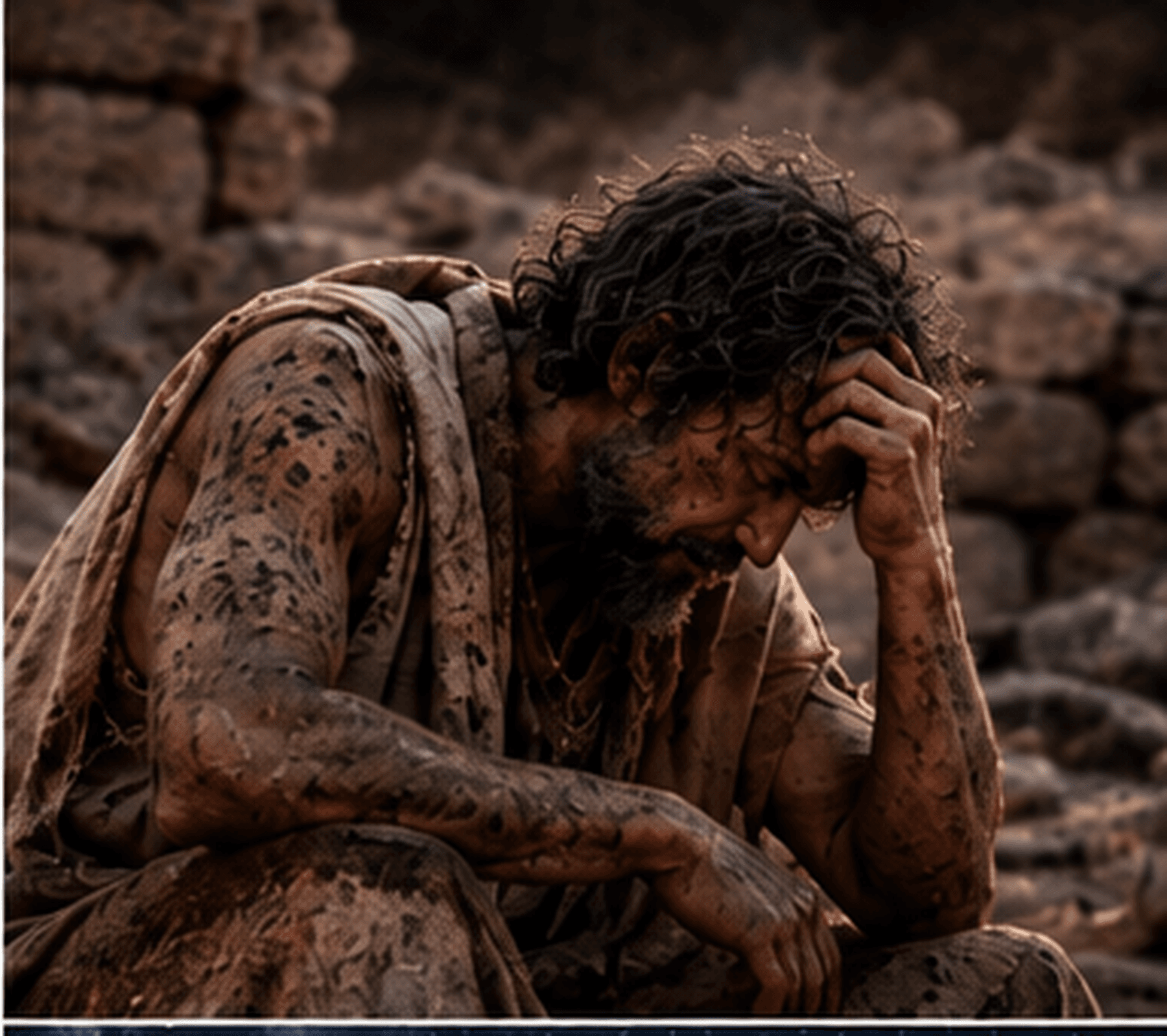
The second heavenly scene intensifies the test, then the camera settles beside Job in ashes.
Follow every verse
Verse-by-verse study
Move from the study rendering, to the verse's place in the argument, to Hebrew and detailed language notes.
Jobs 1–8 include detailed verse-level notes from the supplied exegetical companion. Jobs 9–42 currently use the supplied whole-book synthesis and Hebrew text, with that source-depth difference marked on every verse.
Job 2:1
Integrity under renewed challenge
“And the day came when the sons of God came to present themselves before Yahweh, and the adversary also came among them to present himself before Yahweh.”Job 2:2
Integrity under renewed challenge
“And Yahweh said to the adversary, 'From where do you come?' And the adversary answered, 'From roaming in the earth and from walking about in it.'”Commentary in context
Job 2:1-6: The LORD again names Job's integrity while the accuser asks permission to strike his body. The text again denies that Job's suffering proves divine condemnation.
Job 2:3
Integrity under renewed challenge
“And Yahweh said to the adversary, 'Have you set your heart upon my servant Job? There is none like him in the earth, blameless and upright, fearing God and turning from evil; and still he holds fast to his integrity, though you incited me against him to swallow him up without cause.'”Commentary in context
Job 2:1-6: The LORD again names Job's integrity while the accuser asks permission to strike his body. The text again denies that Job's suffering proves divine condemnation.
Job 2:4
Integrity under renewed challenge
“And the adversary answered Yahweh, 'Skin for skin, and all that a man has he will give for his life.'”Commentary in context
Job 2:1-6: The LORD again names Job's integrity while the accuser asks permission to strike his body. The text again denies that Job's suffering proves divine condemnation.
Job 2:5
Integrity under renewed challenge
“But now, stretch out your hand and touch his bone and his flesh; surely he will 'bless' you to your face.”Commentary in context
Job 2:1-6: The LORD again names Job's integrity while the accuser asks permission to strike his body. The text again denies that Job's suffering proves divine condemnation.
Job 2:6
Integrity under renewed challenge
“And Yahweh said to the adversary, 'Look, he is in your hand; only preserve his life.'”Commentary in context
Job 2:1-6: The LORD again names Job's integrity while the accuser asks permission to strike his body. The text again denies that Job's suffering proves divine condemnation.
Job 2:7
Sores, ashes, and a wounded marriage
“And the adversary went out from Yahweh's presence and struck Job with a grievous sore from the sole of his foot to the crown of his head.”Commentary in context
Job 2:7-10: Job is struck with painful sores. His wife urges him to renounce God, but Job refuses to receive good without also enduring adversity. Both spouses have suffered catastrophic loss; her sentence should be read within shared grief, not as a cartoon of unbelief.
Job 2:8
Sores, ashes, and a wounded marriage
“And he took for himself a potsherd to scrape himself with, while he sat in the midst of the ashes.”Commentary in context
Job 2:7-10: Job is struck with painful sores. His wife urges him to renounce God, but Job refuses to receive good without also enduring adversity. Both spouses have suffered catastrophic loss; her sentence should be read within shared grief, not as a cartoon of unbelief.
Job 2:9
Sores, ashes, and a wounded marriage
“And his wife said to him, 'Are you still holding fast to your integrity? Bless God and die.'”Commentary in context
Job 2:7-10: Job is struck with painful sores. His wife urges him to renounce God, but Job refuses to receive good without also enduring adversity. Both spouses have suffered catastrophic loss; her sentence should be read within shared grief, not as a cartoon of unbelief.
Job 2:10
Sores, ashes, and a wounded marriage
“And he said to her , 'As one of the foolish women speaks, you are speaking. Shall we receive the good from God and not also receive the calamity?' In all this Job did not sin with his lips.”Commentary in context
Job 2:7-10: Job is struck with painful sores. His wife urges him to renounce God, but Job refuses to receive good without also enduring adversity. Both spouses have suffered catastrophic loss; her sentence should be read within shared grief, not as a cartoon of unbelief.
Job 2:11
Seven days of presence
“And Job's three friends heard of all this calamity that had come upon him, and they came, each from his place: Eliphaz the Temanite, Bildad the Shuhite, and Zophar the Naamathite; they arranged together to come mourn with him and comfort him.”Commentary in context
Job 2:11-13: Eliphaz, Bildad, and Zophar come to comfort Job, weep, tear their robes, and sit silently for seven days. Their silent solidarity is their wisest act. The trouble begins when they try to explain what they cannot know.
Job 2:12
Seven days of presence
“And they lifted their eyes from afar and did not recognize him; they lifted their voices and wept, each tore his robe, and they threw dust toward the heavens upon their heads.”Commentary in context
Job 2:11-13: Eliphaz, Bildad, and Zophar come to comfort Job, weep, tear their robes, and sit silently for seven days. Their silent solidarity is their wisest act. The trouble begins when they try to explain what they cannot know.
Job 2:13
Seven days of presence
“And they sat with him on the ground seven days and seven nights, and no one spoke a word to him, for they saw that the pain was very great.”Commentary in context
Job 2:11-13: Eliphaz, Bildad, and Zophar come to comfort Job, weep, tear their robes, and sit silently for seven days. Their silent solidarity is their wisest act. The trouble begins when they try to explain what they cannot know.
Read the movement
Chapter outline and verse-range explanation
Job 2:1-6 · Integrity under renewed challenge
- What is being said?
- The LORD again names Job's integrity while the accuser asks permission to strike his body.
- Why does it matter here?
- The text again denies that Job's suffering proves divine condemnation.
Job 2:7-10 · Sores, ashes, and a wounded marriage
- What is being said?
- Job is struck with painful sores. His wife urges him to renounce God, but Job refuses to receive good without also enduring adversity.
- Why does it matter here?
- Both spouses have suffered catastrophic loss; her sentence should be read within shared grief, not as a cartoon of unbelief.
Job 2:11-13 · Seven days of presence
- What is being said?
- Eliphaz, Bildad, and Zophar come to comfort Job, weep, tear their robes, and sit silently for seven days.
- Why does it matter here?
- Their silent solidarity is their wisest act. The trouble begins when they try to explain what they cannot know.
Coverage check: Job 2:1-13 is covered continuously by the ranges above.
Follow the argument
Words, images, and argument flow
Key words and images
integrity, skin, ashes, comfort, silence
Argument flow
Job worshiped after losing household and children. Job loses health but retains integrity. His wife's grief-filled counsel and the friends' first week of silence introduce the human responses that will shape the book. After seven silent days, Job breaks the silence with a lament in chapter 3.
Connection to the previous speech
Job worshiped after losing household and children.
Connection to the next speech
After seven silent days, Job breaks the silence with a lament in chapter 3.
Read beneath the cross
Law, Gospel, and Christian hope
Law
We cannot secure life through prosperity or read outward loss as a reliable verdict on a person's standing before God.
Gospel
God names Job's integrity before the trial and remains sovereign even when Job cannot see the heavenly scene.
Theology of the cross
Faith clings to God beneath contrary appearances, where blessing is hidden rather than measurable.
Lutheran theological connection
A theology of the cross refuses to identify visible success with divine favor or visible suffering with specific guilt.
Christ-centered canonical connection
The innocent suffering of Job prepares a canonical vocabulary for hearing the truly innocent Christ, without making Job a substitute for Jesus.
Life together
Pastoral and vocational application
Pastoral application
Stay present, protect life, and listen before attempting an explanation.
Vocation and life together
Practice quiet, concrete care for grieving households and embodied sufferers.
Harmful readings to avoid
- Do not infer a specific hidden sin from suffering, illness, bereavement, infertility, mental illness, or disaster.
- Do not treat lament or questioning as automatic unbelief.
Reflect and pray
Discussion questions
- What changes in the argument or story across Job 2?
- Which words or images in Job 2 deserve slow attention?
- What is true here, and what conclusion must not be drawn?
- How does this chapter teach us to accompany a suffering neighbor?
Prayer
Merciful God, teach us to remain with sufferers before we reach for explanations.
Go further
Related themes, voices, and media
Related themes
Related speakers
Verified media
- Thy Strong Word: Job, KFUO Radio (opens in a new tab)
- Live Dramatic Reading of Job, Part 1, Concordia Seminary (opens in a new tab)
- Gospel Relief for the Despairing, The Lutheran Church-Missouri Synod (opens in a new tab)
- Book of Job Animated Overview, BibleProject (opens in a new tab)
Sources
- Holy Scripture, Job
- Lutheran Confessions and Small Catechism
- South Lake Job research corpus
- Job 1-8 exegetical companion
Commentary in context
Job 2:1-6: The LORD again names Job's integrity while the accuser asks permission to strike his body. The text again denies that Job's suffering proves divine condemnation.