Narrative orientation
Where we are
Jesus feeds the multitude, walks over the sea, and gives Himself as the bread that raises believers on the last day.
Narrative magnification
Scenes in This Chapter
Follow the story's natural units, then return here to open the existing verse-by-verse study.
Watch, listen, and go deeper
Media companions for John 6
Begin with the biblical text, then use these clearly labeled Lutheran, Christian, and academic resources for orientation, teaching, and deeper study.
Congregational Course: John
Concordia Seminary, St. Louis
Focused video lessons from Dr. Charles Gieschen and Dr. David Lewis on the text, structure, Christology, signs, glory, and Spirit in John.
Open video resource (opens in a new tab)
Eternal Life
BibleProject
A short biblical-theology video that helps readers trace the life Jesus gives in the present and in the resurrection.
Open video resource (opens in a new tab)
Guide to the Gospel of John
BibleProject · Two videos, 8:46 and 8:32
Two concise visual overviews introduce John's literary movement, signs, discourses, death, and resurrection. Use as orientation alongside the site's Lutheran theological study.
Open video resource (opens in a new tab)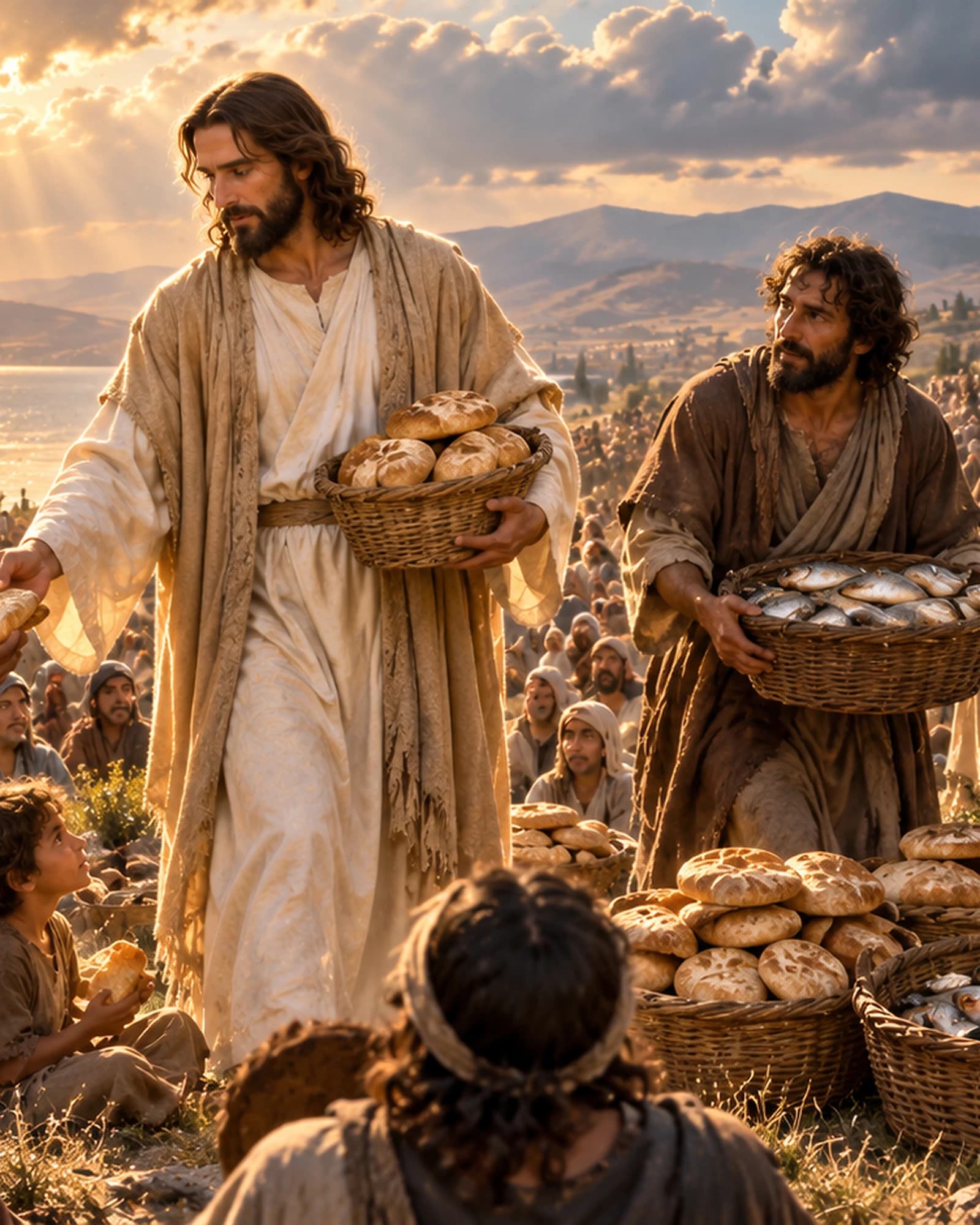
Jesus in All of John
Spoken Gospel on YouVersion
Fifteen short, Christ-centered videos cover John in compact passage ranges from the prologue through the lakeside restoration.
Open video resource (opens in a new tab)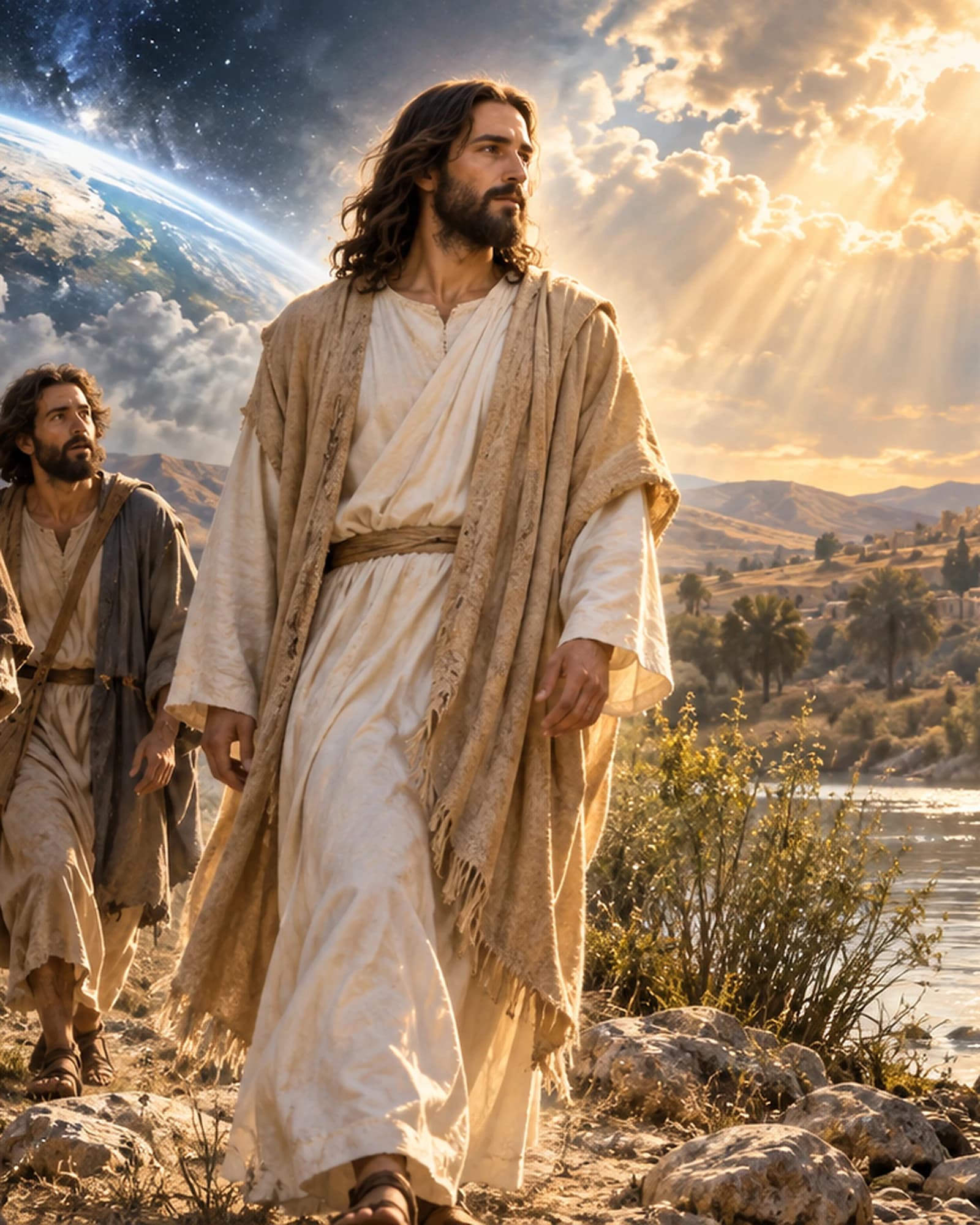
Thy Strong Word: Gospel of John
KFUO Radio
A consecutive, pastor-led study through John from the official broadcast voice of the LCMS. Use the collection to find the episode for this chapter.
Open audio resource (opens in a new tab)30 Minutes in the New Testament: John
1517
An accessible Lutheran conversation that begins with John 1:1-18 and continues sequentially through the Gospel.
Open audio resource (opens in a new tab)Gospel of John Lectures and Studies
Concordia Theological Seminary, Fort Wayne
Dr. William Weinrich's John lectures and focused treatments of passages including John 10 and John 11.
Open audio + video resource (opens in a new tab)Verse-by-verse Bible study
Read every verse, then follow it deeper
The complete WEB text is always visible. Select a verse for passage setting, themes, exegetical study, theological connections, application, prayer, and supplied Greek text.
The World English Bible text is public domain and reproduced from the official 2020 stable eBible.org source. Study and deep-dive material synthesizes the supplied South Lake Church John compilations and the existing research library. Scripture governs every note.
John 6:1-21
Bread in the wilderness and Lord over the sea
Jesus supplies bread abundantly and comes to His disciples across the chaotic sea.John 6:22-59
The bread from heaven
Jesus redirects sign-seeking crowds from perishing food to Himself, the Father's bread for the world's life.John 6:60-71
Will you also go away?
A hard teaching divides hearers; Peter confesses that Jesus alone has words of eternal life.Natural literary ranges
Passage-by-passage study
John 6:1-21
Bread in the wilderness and Lord over the sea
Jesus supplies bread abundantly and comes to His disciples across the chaotic sea.- Narrative setting
- A mountain near the Sea of Galilee at Passover time, then the lake at night.
- Who is speaking
- Jesus, Philip, Andrew, disciples, crowd
- What is happening
- Jesus tests the disciples, feeds five thousand, withdraws from a forced kingship, and identifies Himself on the water.
- What this reveals about Jesus
- Jesus is the prophet-like giver greater than Moses and the divine Lord whose presence answers fear.
- Faith and unbelief
- The sign produces political enthusiasm; the sea scene teaches disciples to receive Jesus' presence amid fear.
Verse-by-verse movement
- A great crowd follows signs.
- Jesus tests Philip while knowing His purpose.
- A small offering becomes abundant provision.
- Twelve baskets testify that nothing is lost.
- The crowd wants a king on its own terms.
- Darkness, distance, and wind surround the disciples.
- Jesus' 'I am' brings them safely to land.
Scriptural connections
Old Testament: Exodus 16; 2 Kings 4:42-44; Psalm 77:16-20
Christus Victor
Jesus walks over the threatening sea and speaks peace into fear.
Gospel
He receives inadequate gifts and feeds the multitude with abundance.
Application
Receive Christ's word in faith, then let His gift take form in truthful love toward the neighbor.
Prayer
Lord Jesus, open our eyes to Your glory and keep us in Your word. Amen.
John 6:22-59
The bread from heaven
Jesus redirects sign-seeking crowds from perishing food to Himself, the Father's bread for the world's life.- Narrative setting
- Capernaum, including teaching in the synagogue.
- Who is speaking
- Jesus, crowds
- What is happening
- A dialogue about bread moves through work, sign, Moses, the Father's drawing, incarnation, eating, drinking, life, and resurrection.
- What this reveals about Jesus
- Jesus is the bread who came down from heaven, gives His flesh for the world's life, and will raise believers on the last day.
- What this reveals about the Father
- The Father gives the true bread, draws hearers to the Son, teaches them, and wills their resurrection.
- Faith and unbelief
- The crowd moves from pursuit to grumbling and dispute as Jesus refuses to become merely a supplier of earthly bread.
Verse-by-verse movement
- The crowd seeks another meal.
- Jesus names faith as receiving the One God sent.
- Manna is reinterpreted through the Father's present gift.
- The bread of life satisfies deepest hunger.
- The Father's drawing brings people to the Son.
- The incarnate One gives His flesh for the world.
- Eating and drinking press toward personal participation in His life.
- Jesus promises resurrection on the last day.
Scriptural connections
Old Testament: Exodus 16; Isaiah 54:13; Psalm 78:23-25
Elsewhere in John: John 1:14; John 10:28; John 15:4-5
Wider New Testament: 1 Corinthians 10:16-17; 1 Corinthians 11:23-26
Law
We labor for food that perishes and resist the incarnate gift when it overturns our terms.
Gospel
Christ gives Himself for the life of the world and promises not to cast out those who come.
Christus Savior
The flesh He gives is 'for the life of the world,' directing the discourse toward His sacrificial death.
Lutheran reflection
The discourse centrally calls for faith in Christ and also speaks with a sacramental density Christians rightly hear alongside the Supper. The chapter should not be reduced to either a bare metaphor or a detached proof-text.
Application
Receive Christ's word in faith, then let His gift take form in truthful love toward the neighbor.
Prayer
Lord Jesus, open our eyes to Your glory and keep us in Your word. Amen.
John 6:60-71
Will you also go away?
A hard teaching divides hearers; Peter confesses that Jesus alone has words of eternal life.- Narrative setting
- Among disciples after the synagogue discourse.
- Who is speaking
- Jesus, disciples, Peter, Judas
- What is happening
- Many disciples withdraw, the Twelve are questioned, Peter confesses, and Jesus names betrayal within the chosen circle.
- What this reveals about Jesus
- Jesus' words are Spirit and life; He is the Holy One of God even when His teaching offends.
- Faith and unbelief
- Public enthusiasm collapses into withdrawal, while Peter's confession clings to Jesus' words without claiming full comprehension.
Verse-by-verse movement
- Many call the word hard.
- Jesus points toward the Son of Man's ascent.
- The Spirit gives life; fleshly mastery cannot.
- Many no longer walk with Him.
- Jesus asks the Twelve rather than lowering the claim.
- Peter confesses there is nowhere else to go.
- Chosen proximity does not erase Judas's coming betrayal.
Coram Deo
Faith remains with Jesus because His words give life, even when understanding is incomplete.
Law
Religious proximity and even apostolic inclusion do not make unbelief impossible.
Application
Receive Christ's word in faith, then let His gift take form in truthful love toward the neighbor.
Prayer
Lord Jesus, open our eyes to Your glory and keep us in Your word. Amen.
Gather around the text
Study questions
- What stands out?
- What questions or tensions arise?
- What does this reveal about life with the Father through Christ?
- How does this shape Christian life this week?
Carry Forward
Conflict now moves into Jerusalem's festival setting, where Jesus promises living water and divides the crowds.
Prayer Focus
For hunger for Christ Himself and faith that remains with His life-giving words.
Read Next
Follow the threads
Related paths
Conversations
Places
- Capernaum: John 2:12, John 4:46-54, John 6:17-71
- Galilee: John 4:43-54, John 6:1-14, John 7:1-10
- Sea of Galilee / Tiberias: John 6:1-21, John 21:1-23
Sources for this study
Holy Scripture governs this study. Later sources illuminate language, history, reception, and doctrine without standing above the text.
- The Gospel according to JohnPrimary source. The governing text for every chapter, structure, claim, and cross-reference.
- World English Bible, 2020 stable Protestant editionPublic-domain English translation. Provides the complete English verse text, reproduced without alteration from the official eBible.org USFM source.
- Supplied critical Greek text of the Gospel of JohnLanguage source. Provides Greek text for every verse present in the supplied edition, normalized only by removing display apparatus marks. John 5:4 is transparently marked as absent rather than reconstructed.
- The Gospel According to John: Exegetical Study, Greek Notes, Law and Gospel, and Teaching CompanionSouth Lake Church study compilation. Synthesized into chapter orientation, verse study, Greek anchors, canonical connections, theological reflection, questions, and application across John 1-21.
- Ancient Christian Commentary on Scripture, John 1-10Ancient Church reception. Used for attributed paraphrases and historical reception in the first half of the Gospel.
- R. C. H. Lenski, The Interpretation of St. John's GospelLutheran commentary. Consulted as a Lutheran exegetical voice, distinguished from Scripture and the Lutheran Confessions.
The supplied copyrighted books remain private research materials. Public pages use original synthesis, short terms, and attributed paraphrase without invented page numbers.